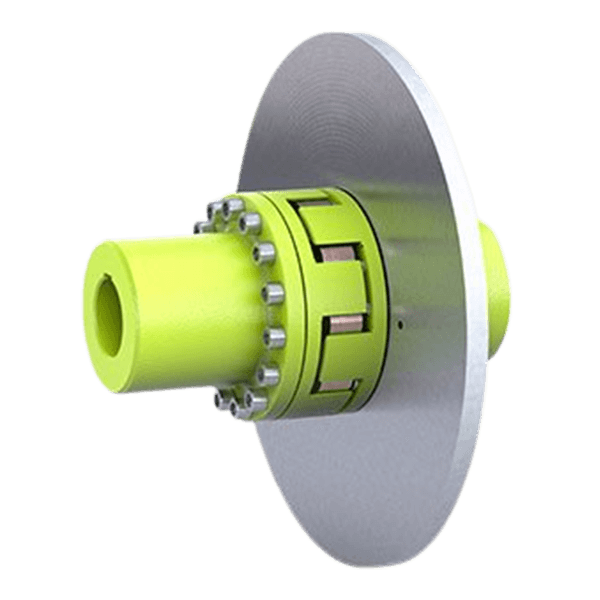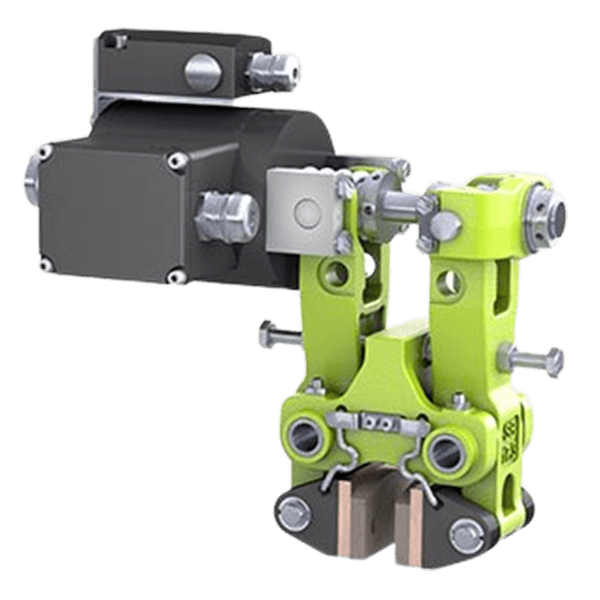
In industrial operations where heavy loads, high torque, and constant motion are the norm, wheel brakes play a vital role in maintaining safety and precision. These braking systems are designed to slow, stop, or hold moving wheels under dynamic or static conditions, making them indispensable in cranes, gantries, hoists, and other mobile equipment.
Huebner Speed Monitoring understands the critical importance of dependable braking technology. As the trusted South African distributor of Dellner Bubenzer industrial brake systems, we provide premium wheel brakes that combine advanced engineering, reliable performance, and exceptional durability.
Through our partnership with Dellner Bubenzer’s German headquarters, we deliver proven, high-performance braking solutions for both static and dynamic industrial applications, ensuring our clients’ operations run safely, efficiently, and cost-effectively.
What Are Industrial Wheel Brakes?
Wheel brakes are mechanical or hydraulic braking systems that act directly on the wheel rim or drum of a moving industrial vehicle or machine. Their primary function is to convert kinetic energy into heat through friction, allowing controlled deceleration or complete stoppage.
Unlike automotive wheel brakes, industrial wheel brakes are designed to withstand much higher loads, longer duty cycles, and more extreme environmental conditions. They are typically used on:
- Overhead and gantry cranes
- Industrial transport vehicles
- Steel mill equipment
- Port and shipyard cranes
- Mining machinery
- Rail-mounted equipment
The result is a system capable of maintaining full braking performance under heavy use while ensuring operational safety and minimal downtime.
How Wheel Brakes Work
The core principle behind wheel brakes is the conversion of motion energy into heat energy through friction. When activated, brake pads or linings are pressed against the wheel’s rotating surface, generating friction that resists motion.
The braking force depends on several key factors:
- Brake pressure (hydraulic, pneumatic, or mechanical force)
- Surface material of the wheel and brake pads
- Wheel diameter and torque requirements
- Speed and load conditions
Modern Dellner Bubenzer wheel brakes integrate advanced hydraulic and electromechanical actuation systems, offering consistent, adjustable braking force for both dynamic braking (slowing or stopping motion) and static braking (holding a load in position).
The Dellner Bubenzer Advantage
Through our partnership with Dellner Bubenzer Germany, Huebner Speed Monitoring provides industry-leading wheel brakes engineered for durability, precision, and ease of integration.
Key features of Dellner Bubenzer wheel brakes include:
- High-performance friction materials designed for long service life and stable torque output.
- Robust mechanical design for demanding industrial environments.
- Fail-safe operation in the event of power loss, ensuring maximum safety.
- Low maintenance requirements due to self-lubricating and corrosion-resistant components.
- Customisable mounting and torque options to suit specific machinery.
- Integration with advanced control and monitoring systems for real-time brake performance diagnostics.
These brakes are used globally in ports, steel plants, and mining facilities, where uptime, safety, and reliability are paramount.
Applications of Wheel Brakes in Industry
Wheel brakes are critical for the precise control and safety of moving machinery in multiple sectors. Their applications include:
- Overhead and Gantry Cranes: Wheel brakes control the movement of crane trolleys, ensuring safe load handling, smooth positioning, and secure holding even on inclines or during wind loads.
- Steel and Heavy Manufacturing: In steel mills and foundries, where heavy-duty machinery operates continuously, wheel brakes provide essential motion control for ladle cars, transfer vehicles, and rolling equipment.
- Port Handling Equipment: For ship-to-shore cranes and container-handling systems, wheel brakes help maintain stability during cargo transfer, particularly under variable environmental and loading conditions.
- Mining and Material Transport: In mining operations, wheel brakes help regulate the movement of rail-mounted ore transporters, shuttle cars, and haulage systems where terrain and load variations demand consistent performance.
- Rail and Locomotive Equipment: Industrial locomotives and track-bound vehicles rely on robust wheel brakes for safe operation, precise stopping, and emergency braking in high-load environments.
Wheel Brakes vs Other Industrial Brake Types
While disc brakes and drum brakes are widely used for stationary or rotational braking, wheel brakes are uniquely designed for mobile equipment. Here’s how they compare:
| Brake Type | Best For | Key Advantage |
| Disc brakes | High-speed, continuous rotation systems | Superior heat dissipation and quick response |
| Drum brakes | Static and heavy-duty applications | Enclosed protection and high torque capacity |
| Wheel brakes | Mobile or rail-mounted machinery | Direct braking on wheels for motion control and holding |
Wheel brakes stand out for their ability to balance mobility and load retention, providing dual safety and control in dynamic industrial environments.
The Importance of Reliable Wheel Brakes
Reliable wheel brakes aren’t just about stopping power; they are vital to overall operational safety, performance, and cost-efficiency. A well-engineered braking system helps prevent accidents, reduce wear on drive components, and minimise downtime due to mechanical failure.
Key benefits include:
- Improved Safety: Ensures precise control of heavy machinery and loads.
- Reduced Downtime: Long service life and easy maintenance lower operating costs.
- Enhanced Performance: Smooth, controlled braking improves mechanical efficiency.
- Energy Efficiency: Modern systems with advanced actuation reduce energy consumption.
- Compliance: Meets global safety standards, including FEM, DIN, and EN norms.
Why Choose Huebner Speed Monitoring
As a leading distributor of Dellner Bubenzer braking systems in South Africa, Huebner Speed Monitoring offers tailored solutions to meet your specific operational requirements. Our braking expertise covers the full spectrum of dynamic and static braking applications, ensuring optimal functionality, safety, and reliability across industries.
Our comprehensive range includes:
- Disc brakes
- Drum and band brakes
- Wheel and gantry brakes
- Motor-mounted brakes
- Dellner Bubenzer BUEL® Range
- Buffers and accessories
- Couplings, hubs, discs, and drums
- Monitoring and control systems
With over 40 years of combined industry experience, we provide technical support, product supply, and after-sales service to help facilities improve safety, performance, and compliance.
FAQs About Wheel Brakes
What are wheel brakes used for in industrial applications?
Wheel brakes are used to control, stop, or hold wheel motion in industrial machinery such as cranes, rail systems, and material transport vehicles.
How do wheel brakes differ from disc or drum brakes?
While disc and drum brakes act on rotating shafts or components, wheel brakes apply friction directly to the wheel itself, ideal for mobile or track-based machinery.
Are Dellner Bubenzer wheel brakes suitable for outdoor environments?
Yes. Dellner Bubenzer designs wheel brakes with corrosion-resistant materials and sealed housings to perform reliably in marine, mining, and industrial outdoor environments.
Can wheel brakes operate in both static and dynamic conditions?
Absolutely. Wheel brakes from Dellner Bubenzer provide controlled deceleration (dynamic) and secure holding (static) capabilities for versatile operation.
How often should wheel brakes be maintained?
Maintenance schedules vary by application, but Dellner Bubenzer wheel brakes are engineered for long service intervals and minimal upkeep, thanks to self-lubricating components.
What industries use wheel brakes most commonly?
They are widely used in steel mills, ports, mining, and crane applications where movement and load handling require precision and safety.
Where can I source genuine Dellner Bubenzer wheel brakes in South Africa?
Huebner Speed Monitoring is the authorised South African distributor for Dellner Bubenzer, supplying premium wheel brakes and related braking solutions.
Enhance Your Industrial Operations with Dellner Bubenzer Wheel Brakes
For industries that demand high-performance braking under extreme conditions, wheel brakes from Huebner Speed Monitoring offer the ideal solution. Combining German engineering excellence with local expertise, we ensure your systems operate safely, efficiently, and reliably.
Contact us today to discuss your industrial braking requirements and discover how our Dellner Bubenzer wheel brake systems can enhance your operation’s performance and safety.