011 482 0088info@dellnerbubenzer.co.za
Click Here to visit
the Global Website of
DELLNER BUBENZER
Single-Banner-001

Comparing Different Brake Control Systems: Why Brake Control Systems Are Important

Brake control systems are critical in ensuring the safety, efficiency, and reliability of industrial machinery. In sectors where heavy-duty equipment is in use, the proper functioning of braking systems cannot be left to chance. Heubner Speed Monitoring is a leading distributor of specialised brake control systems and accessories in South Africa, offering several industrial braking solutions designed to meet the highest quality, dependability, and affordability standards.

From disc brakes and drum brakes to motor-mounted brakes and buffers, our industrial solutions are engineered to enhance safety, reduce downtime, and improve the performance of industrial applications. One of our flagship offerings is the Dellner Bubenzer industrial motor-mounted brake range, which provides top-tier braking performance for various industries.

Why Are Brake Control Systems Important?

Brake control systems serve several essential functions in industrial applications, including:

  • Ensuring Safety: Proper braking systems prevent accidents and injuries by allowing controlled stopping of heavy machinery.
  • Enhancing Efficiency: Reliable brakes ensure smooth operation, minimising the risk of sudden stops or failures that can disrupt workflows.
  • Protecting Equipment: High-quality brakes reduce wear and tear on industrial machines, extending their lifespan and improving operational reliability.
  • Meeting Compliance Standards: Industrial operations must adhere to safety regulations, and a well-functioning brake control system ensures compliance with local and international safety standards.
  • Reducing Maintenance Costs: Advanced braking solutions require less frequent maintenance, saving costs in the long run.

Comparing Different Brake Control Systems

Disc Brakes

Disc brakes use a rotating disc and calliper mechanism to provide stopping power. These are commonly used in high-performance industrial applications due to their reliability and quick response time.

Advantages:

  • High stopping power
  • Efficient heat dissipation
  • Low maintenance

Applications: Heavy machinery, cranes, and conveyors

Drum and Band Brakes

Drum and band brakes operate by applying friction to the inner surface of a rotating drum. These are typically used in applications requiring gradual stopping power.

Advantages:

  • Cost-effective solution
  • Suitable for lower-speed applications
  • Simple design and construction

Applications: Mining equipment, winches, and hoists

Wheel and Gantry Brakes

These brakes are designed specifically for industrial cranes, gantries, and material handling equipment, ensuring smooth and controlled stopping.

Advantages:

  • Enhanced load control
  • High durability for heavy-duty applications
  • Prevents excessive wear on other mechanical components

Applications: Overhead cranes, port equipment, and logistics handling

Dellner Bubenzer Industrial Motor-Mounted Brakes

Our Dellner Bubenzer industrial motor-mounted brakes provide high-performance solutions tailored to demanding industrial environments. These include:

  • MFBs (Motor Fail-Safe Brakes): Designed to engage automatically in the event of power failure, ensuring safety in critical applications.
  • Spring Set Brakes: Uses spring force for braking and requires hydraulic or electric power to release, providing fail-safe braking.
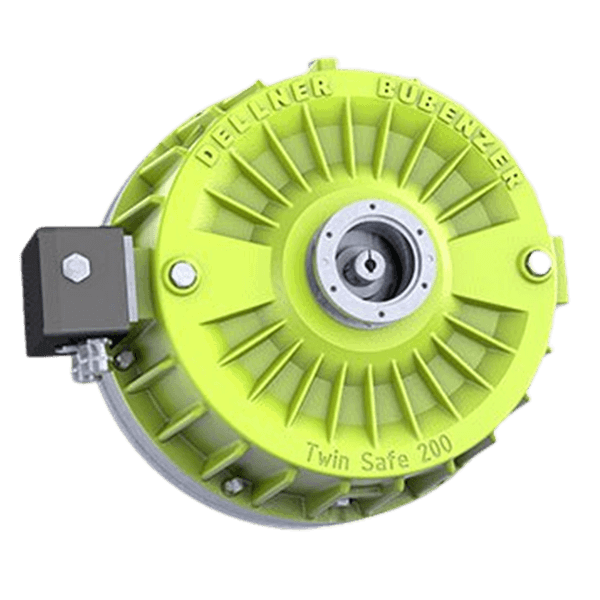
  • Twin Safe Motor-Mounted Brakes: A dual-braking system offering redundancy for enhanced reliability.

Why Choose Dellner Bubenzer Industrial Motor-Mounted Brakes?

  • Reliable Performance: Engineered for high-stress environments, ensuring consistent and dependable braking action.
  • Cost-Effective Solutions: Offers premium performance without excessive costs, making them an ideal choice for industrial applications.
  • Durability: Manufactured using top-quality materials for extended operational lifespan.
  • Industry Versatility: Suitable for various industrial sectors, including manufacturing, mining, and logistics.

Frequently Asked Questions (FAQs)

What industries benefit from brake control systems?

Brake control systems are essential for industries such as mining, manufacturing, transportation, material handling, and heavy-duty machinery operations.

What is the difference between disc brakes and drum brakes?

Disc brakes provide higher stopping power and better heat dissipation, making them ideal for high-performance applications. On the other hand, drum brakes are more cost-effective and suitable for slower-speed applications.

How do motor-mounted brakes improve industrial safety?

Motor-mounted brakes engage automatically in case of power failure, ensuring the machine stops safely and preventing accidents in high-risk environments.

Why should I choose Dellner Bubenzer brakes?

Dellner Bubenzer brakes are known for their exceptional quality, durability, and cost-effectiveness, making them a reliable choice for various industrial applications.

How often should brake control systems be inspected?

Regular maintenance and inspection should be conducted at least once every three to six months, depending on the intensity of use and operational conditions.

Are these brake control systems compliant with industry safety standards?

Yes, our brake control systems comply with industry safety regulations to ensure reliability and efficiency in industrial environments.

Contact Huebner Speed Monitoring for Details

A reliable brake control system is crucial for maintaining safety, efficiency, and operational success in industrial applications. With various braking solutions, including disc brakes, drum brakes, wheel brakes, and Dellner Bubenzer industrial motor-mounted brakes, Heubner Speed Monitoring ensures businesses in South Africa have access to the best braking technology available. Whether you need a fail-safe braking system for heavy machinery or a cost-effective solution for general industrial applications, we have the right product for you. Contact us today to explore our brake control systems and find the ideal solution for your facility.
 

Specific Brakes for Specific Industries: What Brake Does Your Crane Need?

Industrial braking systems are critical in crane safety and performance. Cranes are used across various industries, from construction and manufacturing to ports and mining, requiring specialised brakes that provide control, stopping power, and fail-safe protection.

Choosing the right industrial braking system for your crane ensures smooth operation, load stability, and worker safety. However, with multiple brake types available, selecting the correct one depends on factors like load capacity, operational environment, and braking requirements.

This guide explores specific braking systems for different industrial applications, helping you determine which type of brake suits your crane’s needs.

Types of Industrial Braking Systems for Cranes

Industrial cranes require specialised braking systems designed for different operations, including lifting, hoisting, lowering, and emergency stops. These are the most commonly used industrial braking systems.

Drum Brakes

Best for: Overhead cranes, bridge cranes, gantry cranes

Drum brakes are mechanically or hydraulically operated systems that use a drum and brake shoes to generate friction and stop motion. They are commonly used in industrial cranes due to their cost-effectiveness and durability.

Benefits:

  • High torque capacity
  • Cost-effective for general crane operations
  • Simple maintenance and long lifespan

Limitations:

  • Heat dissipation can be a concern
  • May require regular maintenance in high-use environments

Disc Brakes

Best for: Port cranes, wind turbine cranes, mining cranes

Disc brakes use callipers and brake pads to clamp onto a rotating disc, generating stopping force. They provide faster response times and are suitable for precision braking applications.

Benefits:

  • Excellent heat dissipation, reducing brake wear
  • Higher stopping efficiency compared to drum brakes
  • Suitable for heavy-duty and high-speed applications

Limitations:

  • Higher upfront cost compared to drum brakes
  • Requires regular pad replacement

Thruster Brakes (Electro-Hydraulic Brakes)

Best for: Hoists, electric overhead travelling cranes, heavy industrial lifting

Thruster brakes use electrohydraulic thrusters to engage or release the braking system. Due to their automatic adjustment capabilities and smooth braking action, they are widely used in high-capacity cranes.

Benefits:

  • Self-adjusting system ensures consistent braking force
  • High reliability for heavy-duty lifting applications
  • Can be integrated with automation systems

Limitations:

  • Requires electrical power to operate
  • Complex installation compared to standard brake systems

Fail-Safe Brakes (Spring-Applied Brakes)

Best for: Safety-critical applications in construction, mining, and material handling

Fail-safe brakes engage automatically in case of power loss, ensuring safety in emergency situations. They are essential for applications where uncontrolled crane movement could lead to accidents.

Benefits:

  • Instant activation in power failure scenarios
  • Reduces risk of load drops and accidents
  • Ideal for emergency stop applications

Limitations:

  • Requires additional monitoring systems for effective operation
  • Can be more expensive than conventional brakes

Eddy Current Brakes

Best for: High-speed applications, industrial hoists, and rail-mounted cranes

Eddy current brakes use magnetic fields to create resistance and slow down the crane’s movement. These brakes are ideal for smooth, controlled deceleration and help reduce mechanical wear.

Benefits:

  • Non-contact braking minimises wear and tear
  • Provides smooth and controlled braking
  • Highly effective for precision load positioning

Limitations:

  • Requires electrical power to generate a magnetic field
  • Not suitable for full-stop emergency braking

Industry-Specific Crane Braking Solutions

Different industries require specialised industrial braking systems based on operating conditions, load weight, and safety regulations. Here’s a breakdown of which braking systems are best for specific industries.

Construction Industry

  • Crane Type: Tower cranes, mobile cranes
  • Recommended Brakes: Fail-safe brakes, disc brakes
  • Why? Fail-safe brakes provide emergency stopping in high-risk environments, while disc brakes handle heavy lifting and frequent operations.

Mining Industry

  • Crane Type: Gantry cranes, heavy-duty hoists
  • Recommended Brakes: Thruster brakes, disc brakes, eddy current brakes
  • Why? Thruster brakes ensure precision control in extreme conditions, while eddy current brakes provide smooth deceleration for heavy materials.

Ports and Shipyards

  • Crane Type: Ship-to-shore cranes, container handling cranes
  • Recommended Brakes: Disc brakes, eddy current brakes
  • Why? Port cranes operate at high speeds and require precision control, making disc brakes and eddy current brakes ideal.

Manufacturing and Warehousing

  • Crane Type: Overhead cranes, bridge cranes
  • Recommended Brakes: Drum brakes, thruster brakes
  • Why? These brakes offer cost-effective performance for lifting moderate loads in controlled environments.

Energy Sector (Wind Turbines, Hydroelectric)

  • Crane Type: Maintenance cranes, hoists
  • Recommended Brakes: Fail-safe brakes, disc brakes
  • Why? Wind turbines and energy-related cranes require automatic emergency braking in case of failure.

Choosing the Right Brake for Your Crane

When selecting an industrial braking system for your crane, consider the following factors:

  • Load Capacity: Choose brakes that can handle your crane’s maximum load weight.
  • Operating Speed: High-speed applications need disc or eddy current brakes for precise deceleration.
  • Safety Requirements: Industries with high safety risks should use fail-safe brakes.
  • Environmental Conditions: Mining and port operations need corrosion-resistant brakes for harsh environments.
  • Maintenance Needs: Low-maintenance brakes like eddy current brakes reduce downtime.

FAQs About Industrial Braking Systems

Why are brakes essential in cranes?

Cranes rely on brakes to control movement, prevent load drops, and enhance safety in industrial environments.

What is the most common type of crane brake?

Drum and disc brakes are widely used due to their cost-effectiveness and reliability.

How do fail-safe brakes work?

Fail-safe brakes engage automatically when power is lost, ensuring that the crane stops safely to prevent accidents.

Can I upgrade my crane’s braking system?

Yes, older cranes can be retrofitted with modern braking solutions, such as thruster brakes or eddy current brakes, to improve performance.

How often should crane brakes be inspected?

Crane brakes should be inspected regularly (at least every three to six months) to ensure optimal performance and safety compliance.

What type of brakes are best for high-speed cranes?

Eddy current and disc brakes are best for high-speed operations, offering smooth and controlled deceleration.

The Right Brake for Your Industry Matters

Selecting the right industrial braking system ensures safe, efficient, and reliable crane operation across industries. Whether you need fail-safe emergency brakes, high-performance disc brakes, or smooth eddy current brakes, choosing the correct solution improves safety, reduces downtime, and enhances crane efficiency.

Need help selecting the right industrial braking system for your crane? Contact us today to discuss your industry’s specific needs!